Friday, 21 September 2012

#FACTSvsFALLACIES The Crying Stone of Ilesi - Kakamega

(FALLACY)
Ikhonga Murwe- the crying stone of llesi. Folklore and myth surround this rock found in the western region of the country in the county of Kakamega. Legend has it the rock can't stop 'crying'.


To the government it is a tourist attraction, to the Luhya community living around it, it holds both cultural and spiritual significance. the community carried out rituals to avoid droughts and for cleansing ceremonies. In modern society too the rock holds religious significance as churches like Legio Maria and Rosary Church make pilgrimages to it.


Geologically the rock is a large boulder of acidic plutonic rock, 8 meters tall, made up of quartz, alkali feldspars and mica. there is a small groove in the middle from which water flows out from. the water is believed to be from a moss growing inside the rock that soaks up water during the wet season which allows it to flow long periods of time. 

Follow us @rockesci 
like our page RocKe Scientist 
links 
http://www.articlesbase.com/exotic-locations-articles/the-crying-stone-of-ilesi-kakamega-kenya-2249835.html

Thursday, 20 September 2012

DIAMONDS ARE NOT SQUISHED COAL!!

so what geological misconceptions have people had in the past and still have? well here is one

Reblogged from Lounge of the Lab Lemming

Diamonds are not former coal. Coal is the organic-rich remains of terrestrial plant matter, and this is younger than the oldest land plants, which are roughly 400 million years old. Pb isotope studies of diamonds show that they are generally between 2 and 2.8 billion years old, 5-7 times older than the oldest land plants. Thus diamonds were already collecting their pensions by the time the first coal beds were formed.

Secondly, they have different isotopic compositions. Plants, which fix CO2 via photosynthesis, contain 2% less 13C than the Earth’s mantle, while most diamonds have mantle carbon isotopic composition. The light isotopic composition of coal is due to the preferential uptake of 12C over 13C during photosynthesis. Diamonds, not being related to coal, never photosynthesized, and do not show this effect.

Thirdly, metamorphic minerals have very different textures than hydrothermal ones. Diamonds are thought to precipitate from a CO2 fluid when said fluid is reduced in the mantle. This allows big, low strain crystals to form. Solid state phase transitions generally involve lots of deformation and recrystallization. Were coal to be metamorphosed into diamond, it would probably form a diamond rock with micron-scale crystals. Impact diamonds have grainsizes that are micron to sub-micron, and the source of the carbon is difficult to determine. But they are tiny, and it is theoretically impossible for them to be more than a few carats (they need to be small enough to cool off before the shockwave dissipates, or they will revert to graphite).


Of course, it is theoretically possible to synthesize diamonds from coal in a lab. But this is unlikely to occur for several reasons. If the diamonds are being grown in a traditional metal catalyst belt apparatus, then a low sulphur carbon source should be used to prevent the nickel catalyst from being attacked. If coal was sulphur free, then trout in the Adirondacks would have nothing to complain about. In the case of Chemical Vapor Deposition diamond, a gaseous source- usually methane- is used. With either method, nitrogen from organic compounds in the coal would impart a yellow-green color in the diamond due to the absorption of the single N defect. So coal would be a poor source material for synthetic diamond production.

To summarize: Diamonds are too old to be squished coal, and even if they weren’t they contain the wrong sort of carbon and form through different processes. Furthermore, coal is a poor choice of precursor for synthetic diamond production, as spectroscopic graphite is best for metal catalyst diamonds, and methane is preferred for CVD.

Tuesday, 11 September 2012

SO DO YOU GO AROUND COLLECTING ROCKS??


YES! I have had a lot of my friends who have asked me this question countless times. And the answer is always the same!
Question I always ask them is if a cook goes to the grocery to buy his/her ingredients aren’t we doing the same when we go collecting rock samples? Is it any different?

 Many think its child play. It is, just more professionally done with the expertise of an educated adult. “The field is our office” a former lecturer used to say.
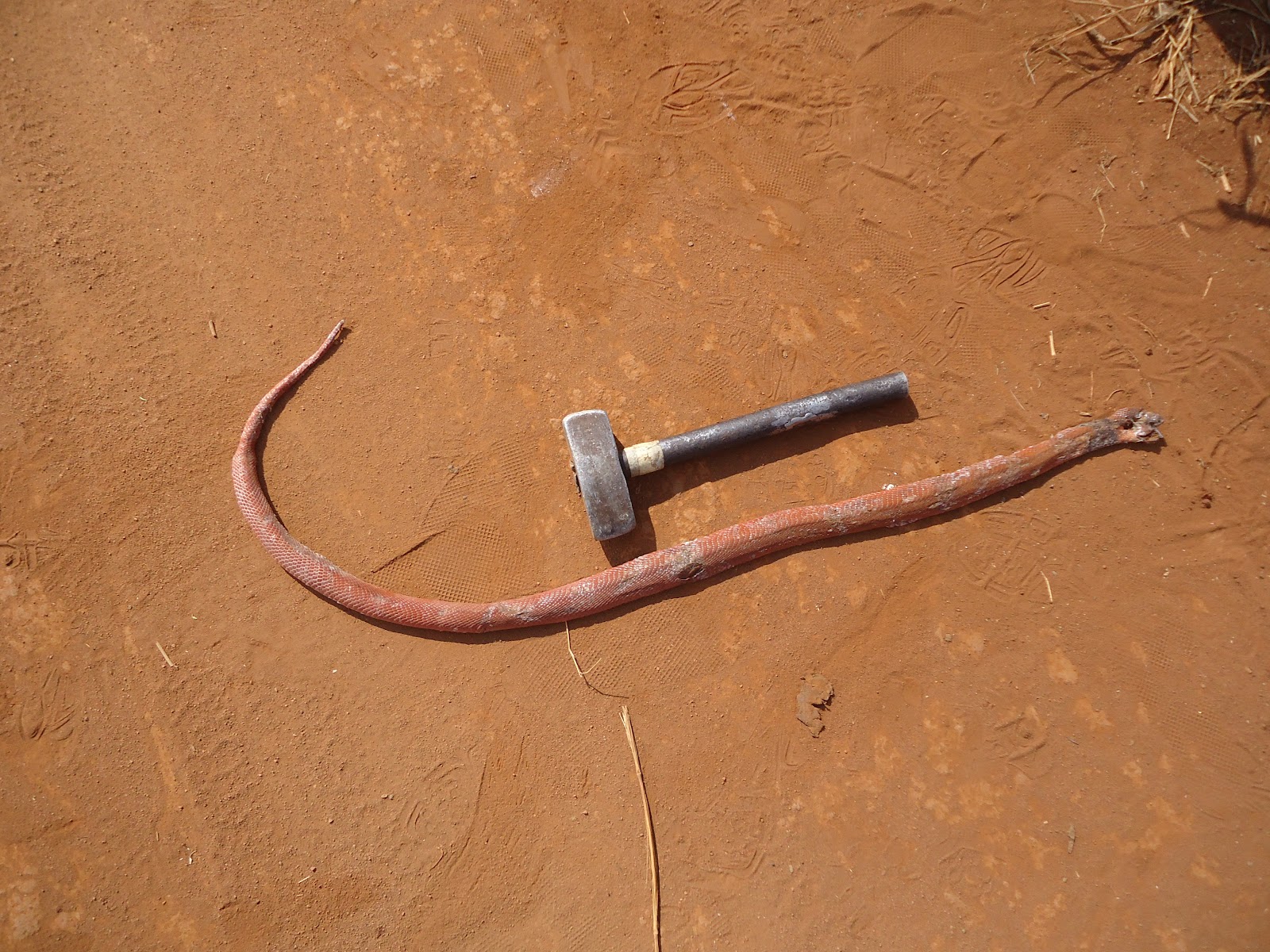
But the field is more than just rocks and stones. Its snakes, scorpions, hostile people, friendly people, its no people at all, the witchcraft THE ALL!! 


Never is one day in the office the same as the other. The excitement never ends. Not a day ever ends without something to remember.its never a dull day at the office!!


The beauty of it all has nothing to do with what we bring along with us after we come back from our excursions, it’s the loads we leave behind (Thank God for the digital camera). 

From  witchcraft
to the innocent smiles

and the innovative

the future and the present
feel free to email me your favorite office, work or field pics to rockescientist@gmail.com and i will publish some of them in a later post

Monday, 10 September 2012

Another Strike in Kenya, But A Useful One This Time


Kenya has struck its first substantive natural gas deposits near Malindi, further raising its profile as a potential oil and gas exporter.

An Australian oil prospecting company Pancontinental involved in drilling off the Kenyan coast said Monday morning it has encountered approximately 52 net metres (about 170 feet) of natural gas pay so far.

The firm says it struck the gas at the Mbawa deep-water well.

By PAUL WAFULA pwafula@ke.nationmedia.com

“The Mbawa 1 well has encountered approximately 52 net metres (approx. 170 feet) of natural gas pay in porous Cretaceous sandstones. The Mbawa 1 exploration well was drilled to a depth of 2,553m RT (below the drill floor), at which point wireline logs, fluid samples and sidewall cores were acquired from the well,” said Mr Barry Rushworth, Pancontinental Chief Executive and Director said in a statement.

The firm said the reservoir and fluid parameters will become available as logs and sample analyses are completed.

It says it has resumed drilling targeting 3,275 metres.

“While we have not finished operations in Mbawa 1, this gas discovery is very promising and it is the first ever substantive hydrocarbon discovery offshore Kenya. We are delighted to prove that there is a working hydrocarbon system offshore Kenya,” Mr Rushworth said.

The firm said further work continues to evaluate the size of the discovery.

“With drilling continuing to a deeper exploration target, these interim results may be the first part of the story in this well, and they are certainly just the beginning of the main story of oil and gas exploration offshore Kenya,” Mr Rushworth said.

The discovery comes at a time when Kenya has already struck oil and is waiting for further analysis to confirm if it the quantities are commercially viable.

Tuesday, 28 August 2012

Turkana, Mrima and THE SIMPSONS!!!


15 years ago ask any typical Kenyan what minerals Kenya had and the only three minerals that popped up were soda ash, diatomite and fluorspar. Blame it on KIE syllabus and our geography teachers. Fast forward to 2012 and Turkana oil will be the first mineral that comes to mind with coal in Kitui coming a close second this time the media hype being to blame! Finally Kenya had ‘landed’ into the lucrative oil business and a possible European style industrial revolution being envisioned in the near future.

With both resources far from exploitation this might take a while and with the fragile state of political affairs vision 2030 might become a 22nd century achievement.

Since independence the Kenyan mineral industry has been dominated by non-metallic minerals with Magadi Soda, Kerio Valley Flourspar, Kariandusi Diatomite and tsavo gemstones (tsavorite) being our most notable resources. Kisii soap stone (which are pumice rocks) has also been a revenue generator in the Western Kenya County. Sculptures begun sculpting the rocks into various characters based on the famous American dysfunctional cartoon family The Simpsons and started exporting their ''Simpson soapstone'' products (Check out a story about it here ) and even more recently started a day in which people displayed their products, ingenious but simple way of marketing themselves!


(pictures courtesy of craftvillageuk.com)


Another undocumented but readily available resource is Carbon Dioxide. This might not come to mind as your basic mineral resource but it has been mined by Carbacid ltd at a mine in Keraita and they have been the major suppliers of extinguishers in the country.


Pockets of gold mines in West Kenya have been death traps for many residents in these areas but significant efforts have been taken to mine in large scale. Magadi soda is probably the only mineral, and Kenyan product that every Kenyan has used!! The salt produced from the lake has been to every Kenyan plate since it hit the markets back in the day. From Athi river mining, Bamburi Cement and East Africa Portland, these companies have taken advantage of the housing boom that has hit Kenya over the last 10 years to double their production of the enormous deposits of limestone in Athi river and the coast which account to 4% of world production. Tiomin Resources Inc. of Canada has planned to produce 330,000 t/yr of ilmenite, 75,000 t/yr of zircon at Kwale.Why are these minerals important? Because they are used in almost every electronic we use meaning demand over the years has pushed their prices even higher. Also in the same category is the mineral pyrochlore found in Mrima Hill also near the coast.


Mrima Hill (pics from mrimahill.com )

The pyrochlore has economic amounts of niobium but with the small amounts of radioactivity from the hill, and with its status as a forest reserve and heritage site mining is yet to begin. Of the Kenya occurrences, that of Mrima has received the most attention and is potentially of greatest importance. Its proximity to the port of Mombasa, the size of the deposit, low mining costs and presence of other commercially interesting minerals could make this one of Kenya’s most important resource (read more about it here)


This list is far from complete. We have many other minerals being explored for and others already being mined in small scale but that’s a story for another day.


GEOLOGICALLY SPEAKING!